
On Luigi Pirandello
... and how we perceive reality

Just like parents hiding vegetables in their children’s food, I believe great authors are those able to sneak powerful ideas into seemingly simple novels and who, much like caring parents, contribute greatly to our healthy development.
One such example is Luigi Pirandello, who uses his novel One, No One and One Hundred Thousand to invite us to revisit our perception of reality.
The story starts off with the protagonist - Vitangelo Moscarda - looking at the mirror and making a simple observation to his wife: that his nose is tilted to the right side, to which his wife replies it has always been that way. This simple exchange triggers several questions inside Moscarda’s mind.
First off, how could he not be aware of something so obvious about his own body? What other things could he not know about his own body? What other things could he not know about himself?
Vitangelo’s questions lead him to the realisation that he is not - physically and psychologically - the person others perceive him to be. Though he has been living all his life believing he was one single person, in actual fact, he is a different person to each and every person that knows him.
Inside Vitangelo’s and everyone else’s mind there is a different Vitangelo, a different persona, which is the beautiful realisation that Pirandello weaves into the novel: our realities are constructed in our minds.
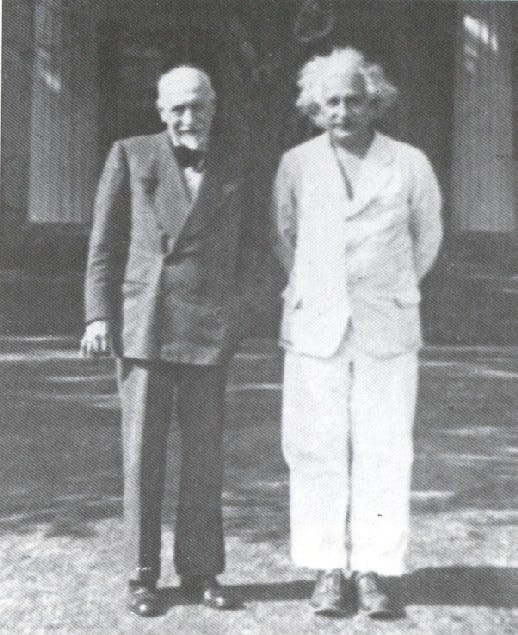
The image - persona - I have of myself will never be the same as the one someone else has of me. Each of us has an own persona for ourself, different personae for those around us and those around us, in turn, have their own personae to represent us. In fact, the difference between how we perceive ourselves and how others perceive us is one definition of personality and, to an extent, predicts how we interact with one another.
This idea gets particularly interesting when we consider these are not static traits, but changing aspects. As we develop and revisit our thoughts and beliefs our realities change as a consequence.
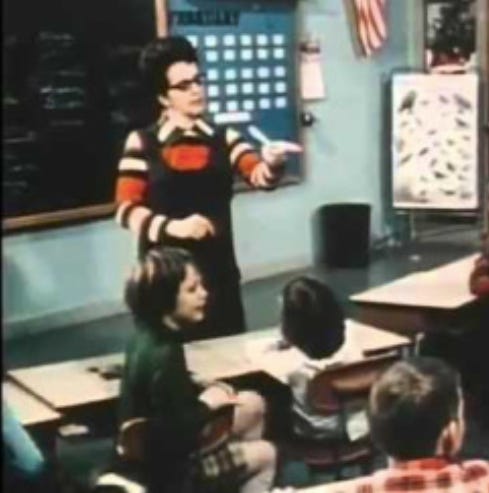
This brings to mind Jane Elliott’s "Blue Eyes/Brown Eyes'' experiment. In 1968, after Martin Luther King’s assassination, in an effort to demonstrate the harmful effects of discrimination, Elliott divided her class of third-graders into two groups, those with blue eyes and those with brown eyes. She concocted a lie to explain to her pupils that blue-eyed students were intellectually superior.
Although nothing had tangibly changed, the students who had been convinced they were superior began scoring higher on tests, completing tasks that were deemed beyond their capacity and, perhaps unsurprisingly, started acting dismissive of their brown-eyed peers. The next day, when Elliott inverted the roles, the behaviours, good and bad, were naturally inverted.
The first important takeaway from this experiment is that a change in the observable reality is always preceded by a mental shift, a law that we often fail to acknowledge. In other words, change starts from within. As Jung posited, we tend to undervalue our internal realities forgetting that all that is now our external shared reality was once a figment of someone’s imagination.
The idea that changes in the observable reality are preceded by internal changes is the backbone of countless motivational, coaching, and self-help methods. There is some irony in the fact that self-help books are generally shrugged off as pseudo-science and yet executive coaches wrap the same principles those books advocate around fancy business lingo and charge top dollar for their training, but I digress.
Visualisation techniques taught by the likes of Bob Proctor and Tony Robbins, or even Rhonda Byrne’s best-seller The Secret advocate the same thing: one pictures a desired scenario, convinces oneself of it and it follows that it is easier to convince others. It is a “fake it till you make it” scenario or, better yet, a self-fulfilling prophecy. These ideas are also cornerstones of Cognitive Behaviour Therapy, CBT, a form of psychological treatment that argues our thoughts, behaviours and feelings are constantly interacting and conditioning one another.

Thinking I might be involved in a car accident might lead me to start anticipating - visualising - multiple accident scenarios, which, in turn, will trigger physiological reactions: increased heart rate, sweating or dizziness. These, in turn, will have a direct effect on my driving skills, impairing my capacity to make good decisions and increasing the chances of me being in an accident in the first place. If, on the other hand, I picture myself having a safe journey home, different physiological reactions and a different outcome likely ensue. Not visualising something negative might also help: ignorance is, after all, bliss.
We can derive from this the importance of a positive mindset, affirmations and many other concepts that are variations on the theme arguing one is considerably more likely to achieve something when one is convinced of it. This is something we can witness in the business world, the sporting world and in our daily lives, as Henry Ford said, “Whether you think you can, or you think you can't--you're right”.
Establishing that change starts from within begs an important follow-up question: what shapes our internal realities in the first place? The answer is the most important lesson from Elliott’s experiment and Vitangelo’s story - our beliefs.
Just like Luigi Pirandello shows us, our self-perception, our perceptions of others and our whole sense of reality are all within our own minds. What we hold as beliefs conditions our actions which, in turn, conditions our tangible realities. This happens whether we like it or not, whether we realise it or not and, most interestingly, as Elliott’s experiment illustrates, irrespectively of whether or not those beliefs have any substantiation whatsoever.
It is important to take a moment to grasp just how deeply our beliefs shape us. Yes, our sense of self is a belief but, in its own right, it is also shaped by other beliefs. There is a duality in the sense that our cultures, languages, and faiths are purveyors of beliefs and yet beliefs in their own right.
This is one of the topics Jordan Peterson addresses in Maps of Meaning: The Architecture of Belief. Drawing from Carl Jung’s work, Peterson demonstrates how we humans are myth-fuelled creatures, deriving our sense of self, our languages, faiths and cultures from myths disseminated across generations. Beliefs have a narrative structure - they are stories - so buying into stories we tell ourselves or are told by others is what ultimately shapes our realities. Peterson also argues our emotional well-being depends on the integrity of the stories we hold dear, as we see with Vitangelo in the novel.
As I have previously mentioned, we are constantly interacting and selling to one another. People try to persuade us to buy their services, products and ideas using stories - the famous storytelling - to achieve that goal. Ultimately, we are constantly exchanging stories with one another and constantly altering each other’s realities.
Yes it may sound far-fetched to say a salesperson selling you insurance or a new car is altering your reality, but try changing the salesperson to someone preaching a new product or, better yet, persuading you to change your lifestyle, pick up a new habit or join a company. Hiring, or convincing someone to take up a new faith are sales. Longer, more complex and intangible sales, but sales nonetheless. Case in point, do product evangelists preach or sell?
The entrepreneurial ecosystem is a prime illustration of these ideas put together: self-fulfilling prophecies and selling visions through storytelling. Successful founders are those who can convince those around them of a given vision, often where there is nothing to begin with. It is no coincidence that the most influential founders are deemed to have a “reality distortion field” around them, meaning their belief is so strong it warps their reality and the realities of those around them. Curiously, given that 90% of startups fail, we can infer that, much like in Jane Elliott’s class, loads of us are being told lies.
In the start-up realm, the billion-dollar question investors are trying to answer is just this one: what makes a successful venture? The team’s skills, the vision or their capacity to execute? I believe recent crashes like the ones from WeWork showed us that having a founder who is fantastic at selling a vision is only half the solution. In our evermore fickle and shallow world, ‘fake it till you make it’ will get you far, but is still no substitute for having a solid business in the long run, a definite topic for a future piece.
A related question was posed by Isaiah Berlin in his famous essay The Hedgehog and The Fox: were the victories of Napoleon’s army mostly due to Napoleon’s guidance or the soldiers’ grit and effort? Berlin makes a case that these two factors are inextricable: there’s no victory without a vision which, in turn, conditions the soldiers’ will to succeed, the business equivalent of a founder armed with a vision, the right storytelling and a skilled team.
As with every powerful idea, the power to convince, shape realities and rally individuals behind a cause has been misused countless times, from totalitarian regimes to cults. I believe there is a very thin line separating Steve Jobs from Osho or other cult leaders. It is easier to visualise it replacing Jobs for WeWork’s Adam Neumann or even Steve Jobs-wannabe-turned-fraudster Therano’s Elizabeth Holmes. It is also unsurprising that many companies with a strong culture feel a lot like cults.
Stories are also what is behind a strong company culture. As Yuval Harari illustrates in Sapiens, Renault - much like any other company or entity - has a founding story, which is used to explain its culture and motivate desired behaviours on every single Renault employee. Though no one at Renauld today ever met the Renault brothers, their legacy, company and values are preserved and extended by each employee who buys into that vision. We can further extend the example into a country's culture: today’s Americans have not met their founding fathers but know and are willing to die for the values they espoused.
History shows us individuals with the great capacity to persuade and share their thoughts and vision do alter minds, behaviour and shared realities. As Steve Jobs famously said, “The people who are crazy enough to think they can change the world are the ones who do”.
Our beliefs, good and bad, are what condition our own internal realities and, consequently, our tangible external circumstances. This goes to show how important it is for us not only to surround ourselves with good influences, but to scrutinise what beliefs we hold. While Jane Elliot’s experiment teaches us to be wary of what ideas are being fed to us and how they ultimately condition our lives, Luigi Pirandello masterfully shows us that, much like Vitangelo does in the story, we can, at any point, take a step back, regroup and reconsider our thoughts, ourselves and our realities. Unlike Pirandello’s book, in real-life nothing is written.